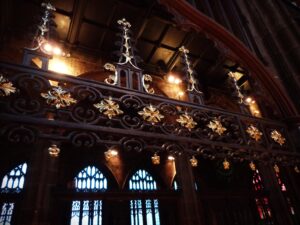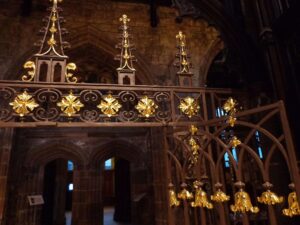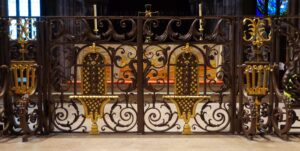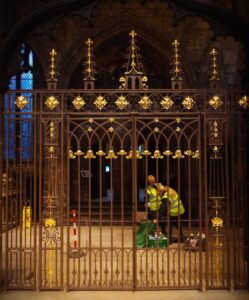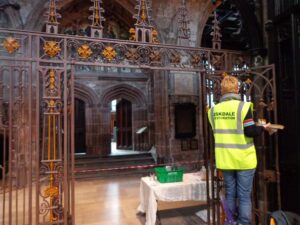
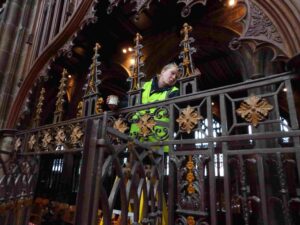
The ironwork surrounding the chancel and altar was commissioned to keep the general public out of the chancel and choir area of the cathedral. The cathedral was a very busy place due to it being the only church within the area to conduct weddings and funerals etc. It is said that it was a common occurance for the inebriated to wander and stumble around and making a general nuisance of themselves. So it was seen fit to install gates and railings to keep them out of that space so an assemblance of order could be maintained when services and events were taking place. The ironwork was made by the extremely skilled ironsmith, Robert Bakewell (1682-1752).
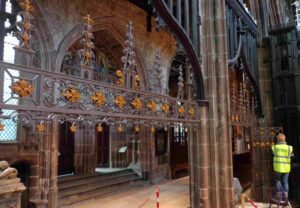


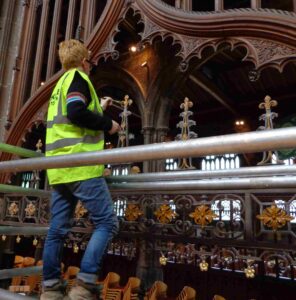
We were sub-contracted by our friends at Calibre Metalwork to gild the ironwork. The gilding was carried out using a traditional oil method and 23 1/2 carat gold leaf. There are always considerations that have to be made when gilding in fluctuating, cold and damp environments. On this occasion we were pleased to learn on our arrival the cathedral had underfloor heating. This provided a constant, if unusually warm, environment in which to gild.

Historic Gold leaf Box
We used a 3 hour oil based gold size. Environmental factors greatly affect how quickly the size takes to go to ‘tack’ so we have to consider and makes necessary adjustments when needed to accommodate for this. We use real gold leaf so the surface will shine bright and will never dull or tarnish. The gold leaf comes in small booklets which each booklet containing 25 leaves. We store our booklets in traditional boxes which keeps the gold safe from moisture, see photograph to the left of an historic George Whiley gold leaf storage box specifically for storing loose leaf.
We applied the leaf loose giving the best possible finish. After all surface areas have been covered with gold the excess gold leaf is very gently removed with a soft brush leaving a beautiful smooth, bright finish.