Francis Skidmore (1817-1896) was a Victorian metalworker. Based in Coventry, F. Skidmore & Son were commisioned for various business but in the 1850’s, when Francis met Sir Gilbert Scott, along came commissions of high profile work such as the Hereford, Lichfield and Salisbury cathedral screens and the Albert Memorial. Forming a strong relationship, they worked closely together and it is said that Scott would use no other than Skidmore for his decorative metalwork.
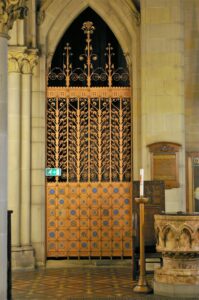
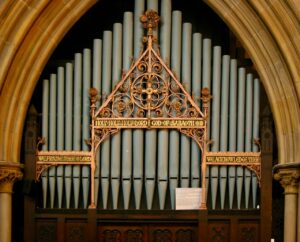
At All Saints Church, Little Horton in Bradford, West Yorkshire are two Skidmore organ screens, a pulpit, a prayer desk and altar rails that required restoration. Before the reinstatement of Francis Skidmore’s polychrome and gilt decoration could be carried out all items required paint sampling to effectively determine the original scheme to enable a full and faithful restoration. The pulpit and organ screens remained in their original positions within the Church. However, over the years some physical damage had occured and all surface areas had been overpainted with both a copper and brass effect paint, the west facing screen also having blue gloss detailing. The prayer desk and altar rails had been stored in a cellar for many years and as a result had suffered metal corrosion and subsequently the loss of much surface decoration.
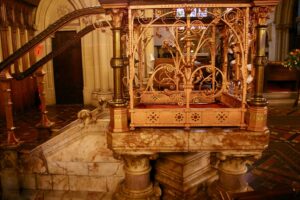
Photograph to the left shows the west facing door screen before work. Below shows the front pipe screen and pulpit that had received the same metal paint treatment during the 1980’s.
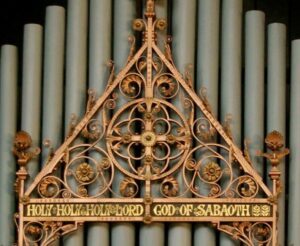

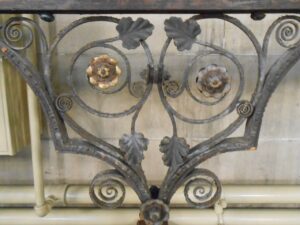
The condition of the prayer desk and altar rails (above) were very poor although some remains of the decoration was present and this evidence was removed and taken for analysis.
Eminent master blacksmith Don Barker cleaned, treated and stabilised all corrosion on the prayer desk and altar rails. Missing elements on all items were recreated by Don and damaged items repaired. In addtion to over 200 paint samples analysed, further research and on site paint removal provided all information required to fully reinstate all polychrome and gilt decoration.
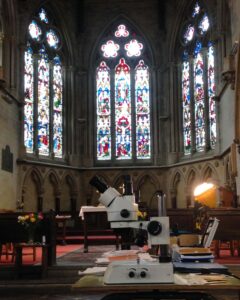
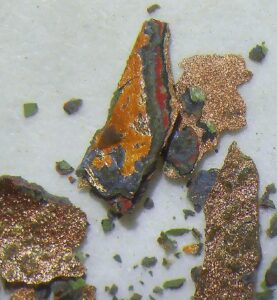

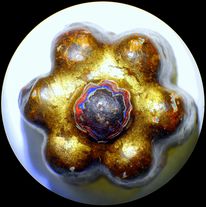
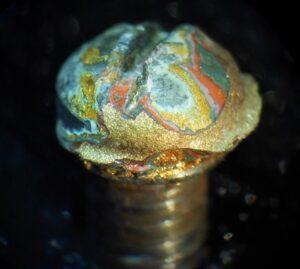
Due to the complex nature of Skidmore’s colour scheme occasionally equipment is taken on site to double cross reference our findings. Our research indicated that both screens and the pulpit had been decorated on three separate occasions.
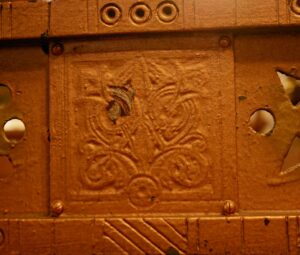
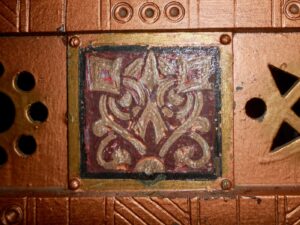
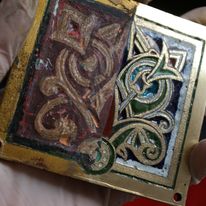
On site paint removal revealed some interesting previous decorative interventions and eventually revealed the original enamelled plaques on the puplit which had been overpainted very early on its history (see below).
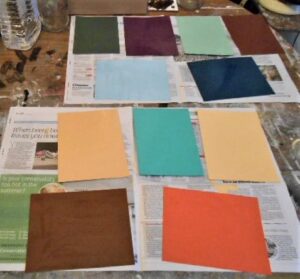
Once all evidence had been collected Skidmore’s colour palette was recreated. All colours were hand-mixed to an exact match of the original. Whilst the colour matching is being carried out colour swatches were created for reference, archival purposes for our own library and for the church records (see below). To view this project please go to our projects page or click here.